Health
Health
Sun, Fear, and the Science We Missed
Avoiding the sun might be shortening your life. That sounds dramatic — but it is what one of the largest studies on sun exposure has found. We grew up with a clear message: sun causes cancer, sunscreen prevents it. The science behind that message is real, but it is only part of the picture.

The message we learned
The warning has been consistent for decades: Too much sun causes melanoma. Melanoma kills. Protect your skin. It is a logical chain, and it is not wrong — UV-B radiation does damage DNA in skin cells, and repeated damage over time can lead to cancer.
But the message quietly left something out. Sun exposure does not only cause harm. It triggers processes in the body — some of them essential — that most people never hear about.
What sunscreen does — and does not do
A high-SPF sunscreen blocks most UV-B. SPF 30 filters out about 97 percent. SPF 50 filters around 98 percent. In theory, this means very little UV-B reaches your skin — and almost no vitamin D gets produced.
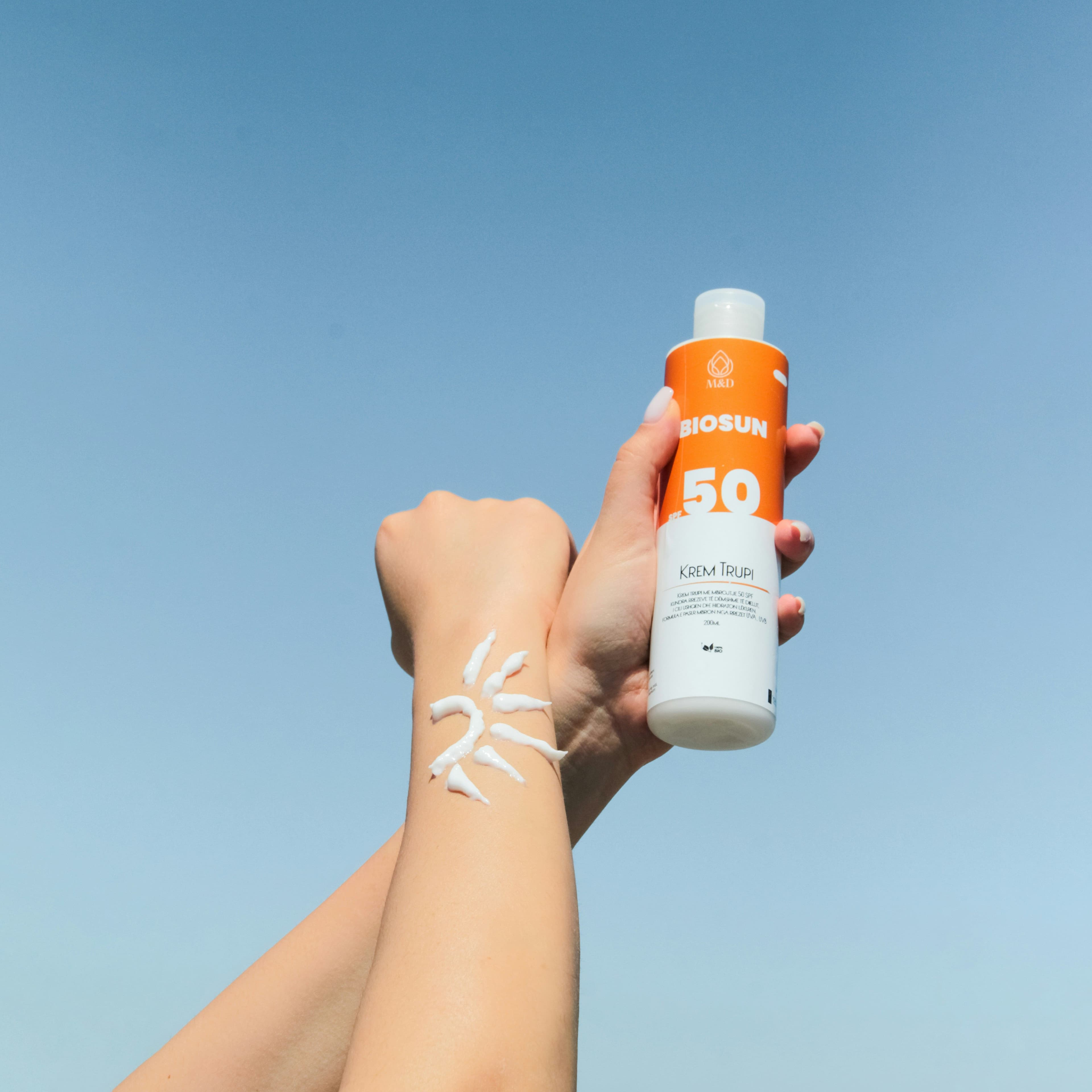
In practice, the picture is different. Studies show that people apply roughly half the amount of sunscreen needed to achieve the stated SPF. They miss patches, forget to reapply, and leave areas uncovered. Research has not found that regular sunscreen use causes vitamin D deficiency. But many people in Norway are already low on vitamin D by spring. For them, spending the short summer under thick SPF coverage does little to refill the deficit.
Further from the equator, more cancer
Here is something that rarely appears in public health campaigns. The cancers that kill the most people — colon, breast, prostate, ovarian — are all more common at higher latitudes. The further you live from the equator, the higher the rates. This pattern has been documented since the 1940s and is supported by extensive research.
The leading explanation is vitamin D. At higher latitudes, UV-B is weaker and less available. Lower vitamin D levels are associated with higher rates of these internal cancers. One large meta-analysis found that people with the lowest vitamin D levels had 14 percent higher cancer mortality than those with the highest levels.
This does not mean sunlight cures cancer. The evidence is largely associative — it shows a pattern, not a proven cause. But the pattern is consistent, and it runs in the opposite direction from the message most of us grew up with.
The Swedish study that changed the question
In 2014, Swedish researcher Pelle Lindqvist published results from a 20-year study following 29,518 women. The question was simple: what happens to people who avoid the sun? Women who actively avoided sun exposure had a significantly shorter life expectancy than those who spent time in it. The increase in mortality was comparable to that of smokers. They died more often from cardiovascular disease and non-skin cancers. Melanoma risk was higher in the sun-seeking group — but overall, those women lived longer.
The study did not say sunscreen is dangerous. What it showed is that the risk equation around sun exposure is more complicated than the simple message most of us received as children.
Beyond vitamin D — sunlight and the heart
When UV-A light hits your skin, it triggers the release of nitric oxide — a molecule that relaxes blood vessels and lowers blood pressure. This happens within minutes. It does not happen when you take a vitamin D supplement.
Professor Richard Weller at the University of Edinburgh has studied this for over a decade. He found that more sun exposure correlates with lower blood pressure and lower rates of cardiovascular disease. This effect is independent of vitamin D levels entirely. In a country where heart disease is the leading cause of death, that finding matters.
The real risk is burning, not sunlight
Melanoma is real. In Norway, around 3,000 new cases are diagnosed each year, and fair-skinned people face higher risk. That is not something to dismiss. But the research points clearly to a specific pattern as the main danger — not regular sun exposure, but intermittent intense exposure: avoiding the sun for months, and then burning on a week abroad in July.
Regular, moderate sun that does not burn is consistently associated with lower overall mortality. The message, as it was usually delivered, made people afraid of the sun itself — without distinguishing between these two very different things.
The goal is not to avoid sunscreen. The goal is to avoid burning — while also giving your body the sunlight it was built to use.
What a sensible practice looks like
There is no single rule that fits everyone. Skin tone, latitude, time of year, and time of day all matter. But for a fair-skinned person in Norway, a reasonable approach looks something like this.
Between May and September, UV-B is strong enough to matter. Spend 15 to 20 minutes in midday sun with skin exposed — arms, legs, face. This is enough for meaningful vitamin D production and nitric oxide release. Do not burn. If you are staying outside longer, apply sunscreen. Outside that window, the sun in Norway is too weak for vitamin D production — with or without sunscreen.
Go Deeper
If you want to explore this topic further:
- Sun exposure and health — Wikipedia: Health effects of sunlight exposure
- Sun avoidance and mortality — Lindqvist et al., Journal of Internal Medicine: "Avoidance of sun exposure is a risk factor for all-cause mortality" (onlinelibrary.wiley.com/doi/abs/10.1111/joim.12251)
- Lindqvist PG et al. (2016). Avoidance of sun exposure as a risk factor for major causes of death: a competing risk analysis of the Melanoma in Southern Sweden cohort. Journal of Internal Medicine, 280(4):375–387. https://onlinelibrary.wiley.com/doi/10.1111/joim.12496
- Nitric oxide and cardiovascular health — Karger: "Sunlight Has Cardiovascular Benefits Independently of Vitamin D"
- Latitude, vitamin D and cancer — PMC/NIH: Sunlight and Vitamin D: A global perspective for health (pmc.ncbi.nlm.nih.gov/articles/PMC3897598)
- Vitamin D and cancer mortality — MDPI Nutrients: Vitamin D's Impact on Cancer Incidence and Mortality
- Grant WB (2002). An estimate of premature cancer mortality in the U.S. due to inadequate doses of solar ultraviolet-B radiation. Cancer, 94(6):1867–1875. https://pubmed.ncbi.nlm.nih.gov/11920550/
- Metaanalyse av 12 kohortstudier: Vitamin D and Cancer Risk and Mortality: State of the Science. PMC/NIH. https://pmc.ncbi.nlm.nih.gov/articles/PMC5858034/
- Robsahm TE, Tretli S, Dahlback A, Moan J (2004). Vitamin D3 from sunlight may improve the prognosis of breast-, colon- and prostate cancer (Norway). Cancer Causes & Control, 15(2):149–158.
- Elwood JM, Jopson J (1997). Melanoma and sun exposure: an overview of published studies. International Journal of Cancer, 73(2):198–203.
- Kreftregisteret / Folkehelseinstituttet (2026). Cancer in Norway 2025.
- Autier P et al. (2014). Vitamin D status and ill health: a systematic review. The Lancet Diabetes & Endocrinology.
- Holick MF (2007). Vitamin D Deficiency. New England Journal of Medicine. https://www.nejm.org/doi/full/10.1056/nejmra070553
- Wacker M & Holick MF (2013). Sunlight and Vitamin D: A global perspective for health. Dermato-Endocrinology. https://pmc.ncbi.nlm.nih.gov/articles/PMC3897598/
Heidi Fink
Content and project lead, Sollees
Heidi is on a mission to share honest, well-grounded information about sunlight and health. She is especially drawn to the biology of it all — how our bodies are wired to respond to light, and what that means for the way we live.
Keep reading
 The Hidden Thing Sunlight Does to Your HeartRegular, moderate sun exposure is a health behaviour the body depends on.
 How Sunlight Makes Vitamin DSunlight is not just pleasant to be in. For vitamin D, it is the starting point of a process your body cannot easily replace.
 The Physics of Sunlight II: The Ghosts the Sun Sends Through YouNeutrinos tell us something strange and beautiful about what the sun really is.