Light & Living
Seasons
Wired for Sunlight, Living in the Dark
A typical day for many people looks like this: wake up before dawn in artificial light, commute in a dark car or underground train, sit in an office under fluorescent lighting for eight hours, come home after sunset, and spend the evening in front of screens. Your circadian clock receives barely any signal from actual daylight. Researchers call this circadian misalignment, and its effects are far more serious than just feeling off.
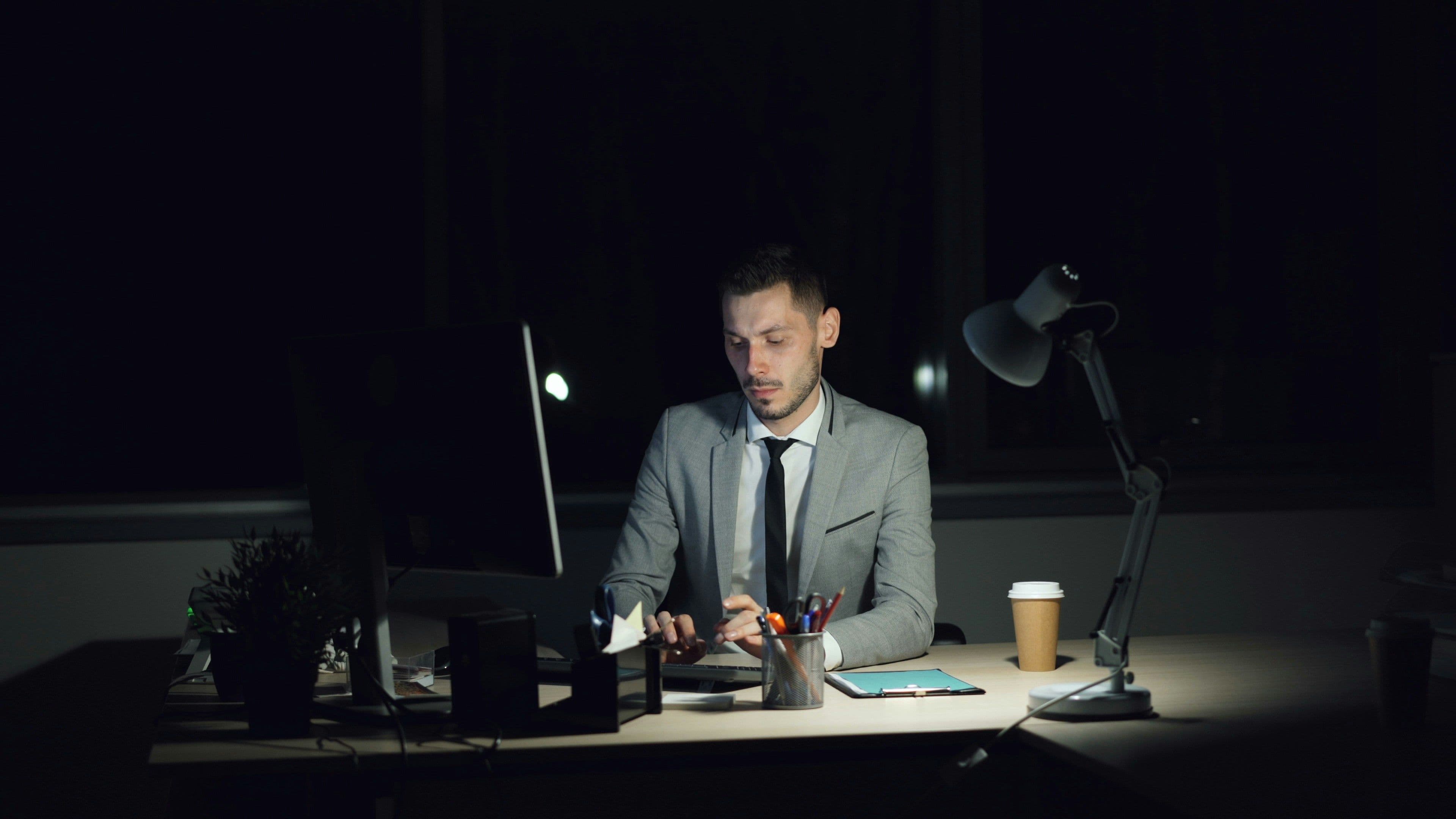
I live in Norway, and every year, without fail, October reminds me that I am not as in control of my mood and energy as I’d like to think. The days shorten, the light fades, and something shifts — not just outside, but inside me. I get slower, heavier, a little less like myself. For years I chalked it up to “just how winter is.” It wasn’t until I started researching the science of light and human biology that I understood: this isn’t just a feeling. It’s physiology.
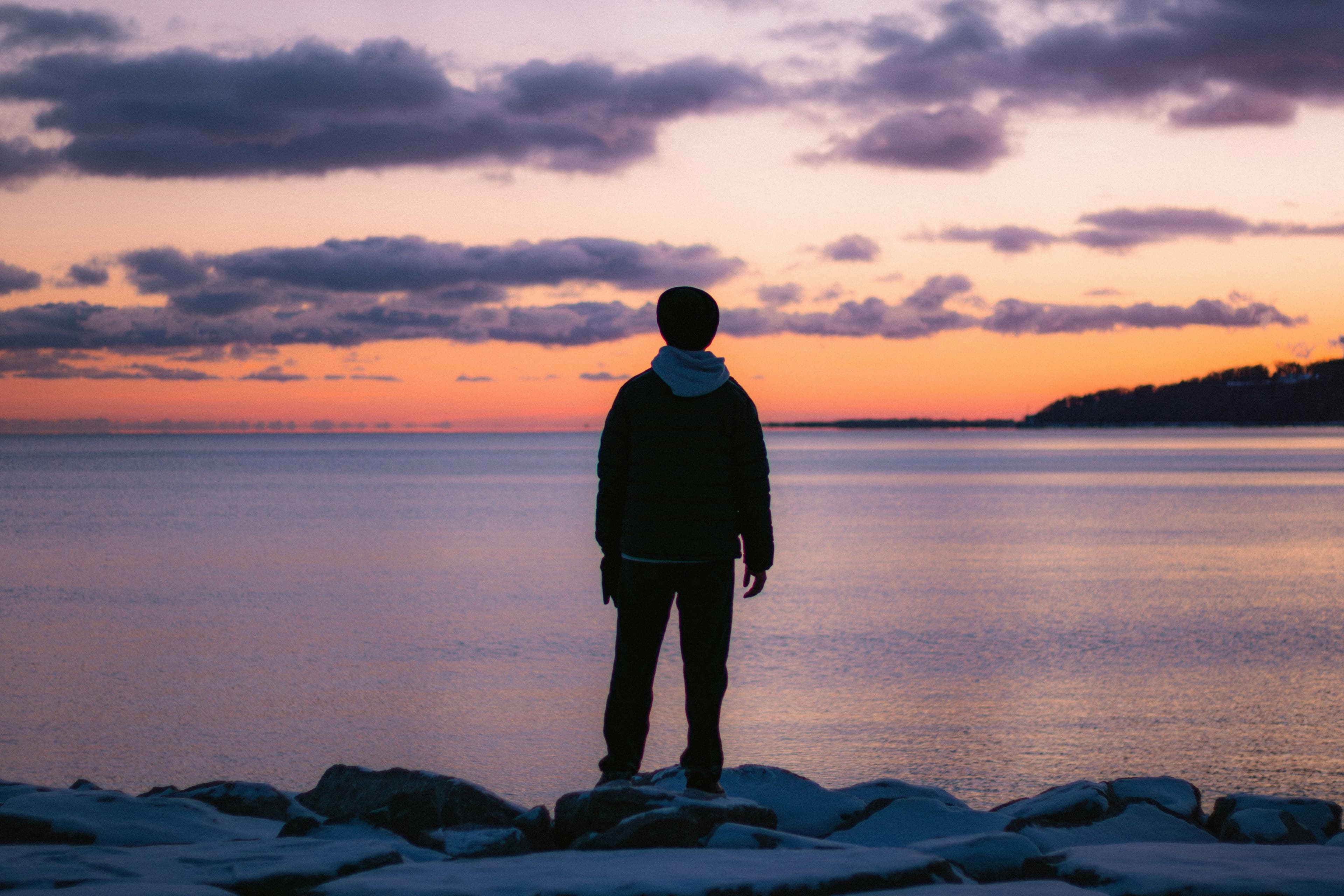
The clock inside you
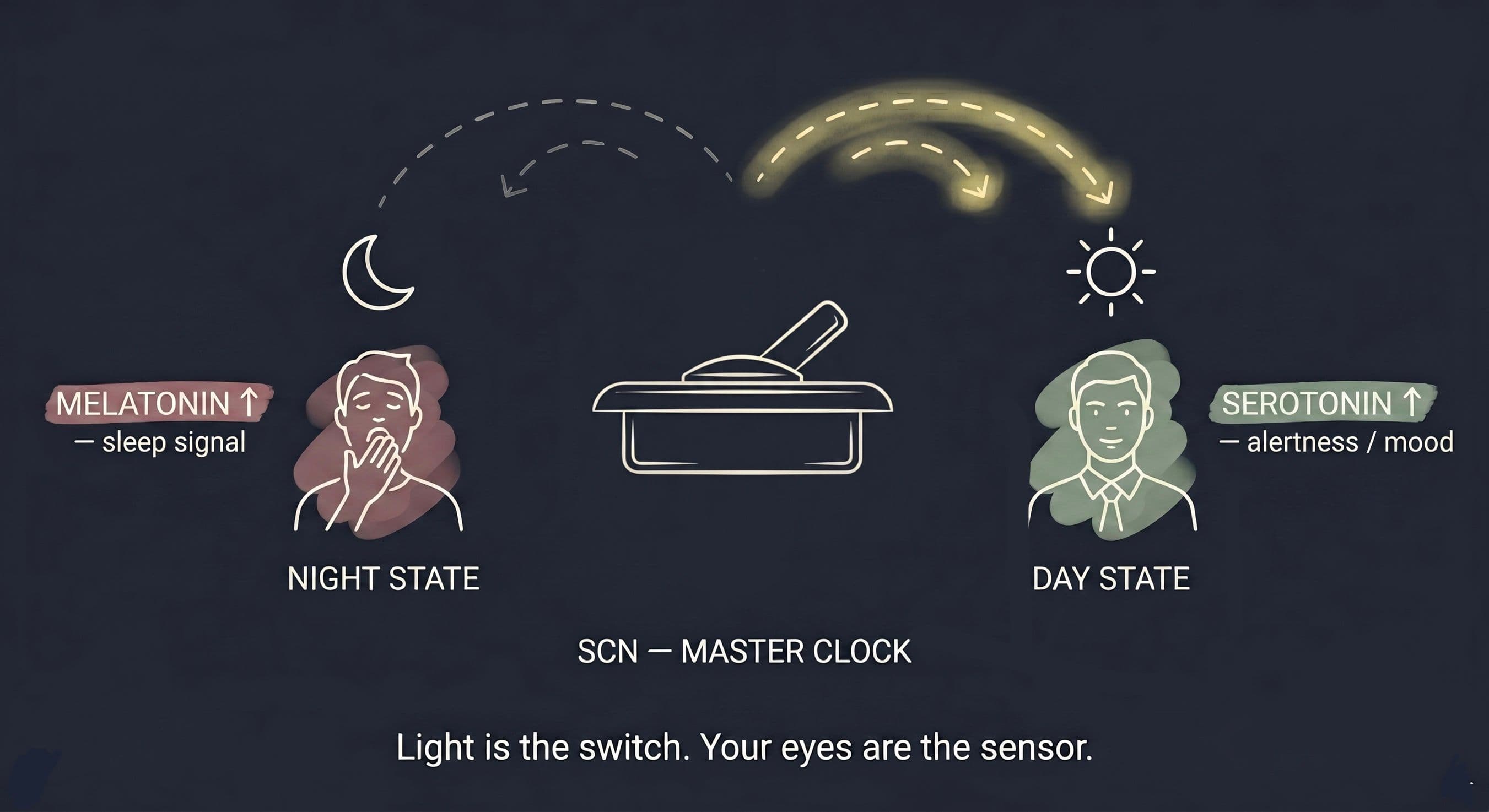
Every living cell in your body runs on a roughly 24-hour cycle. This internal timing system — the circadian rhythm — orchestrates nearly everything: when you feel alert, when you feel sleepy, when your body releases hormones, and when your immune system is most active. At the center of it all is a tiny cluster of neurons in the brain called the suprachiasmatic nucleus (SCN), which acts as the master clock, synchronizing all the peripheral clocks distributed throughout your organs and tissues. And the SCN has one primary input it relies on above all others to stay calibrated: natural sunlight.
How light sets the clock
When light enters your eyes, specialized photoreceptors called intrinsically photosensitive retinal ganglion cells pick up the signal. These cells are particularly sensitive to the short-wavelength blue light that is abundant in natural daylight, especially in the morning, and they send a direct signal to the SCN, which then adjusts the body’s internal timing.
Morning light tells your body it’s time to wake up. It triggers the release of cortisol — not the “stress hormone” it’s often painted as, but your body’s natural energizer — suppresses melatonin production, raises body temperature, and essentially hits the reset button on your biological clock for the day. Evening light does the opposite: as the sun disappears, the SCN reads this as a signal to begin winding down, melatonin rises, and your brain starts preparing for sleep.
This system works beautifully when you live in sync with the natural light cycle. The problem is, most of us don’t.
The modern mismatch
A typical day for many people looks like this: wake up before dawn in artificial light, commute in a dark car or underground train, sit in an office under fluorescent lighting for eight hours, come home after sunset, and spend the evening in front of screens. Your circadian clock receives barely any signal from actual daylight — and then, just when it’s trying to prepare your body for sleep, it gets bombarded with artificial blue light that tricks the SCN into thinking it’s still midday.
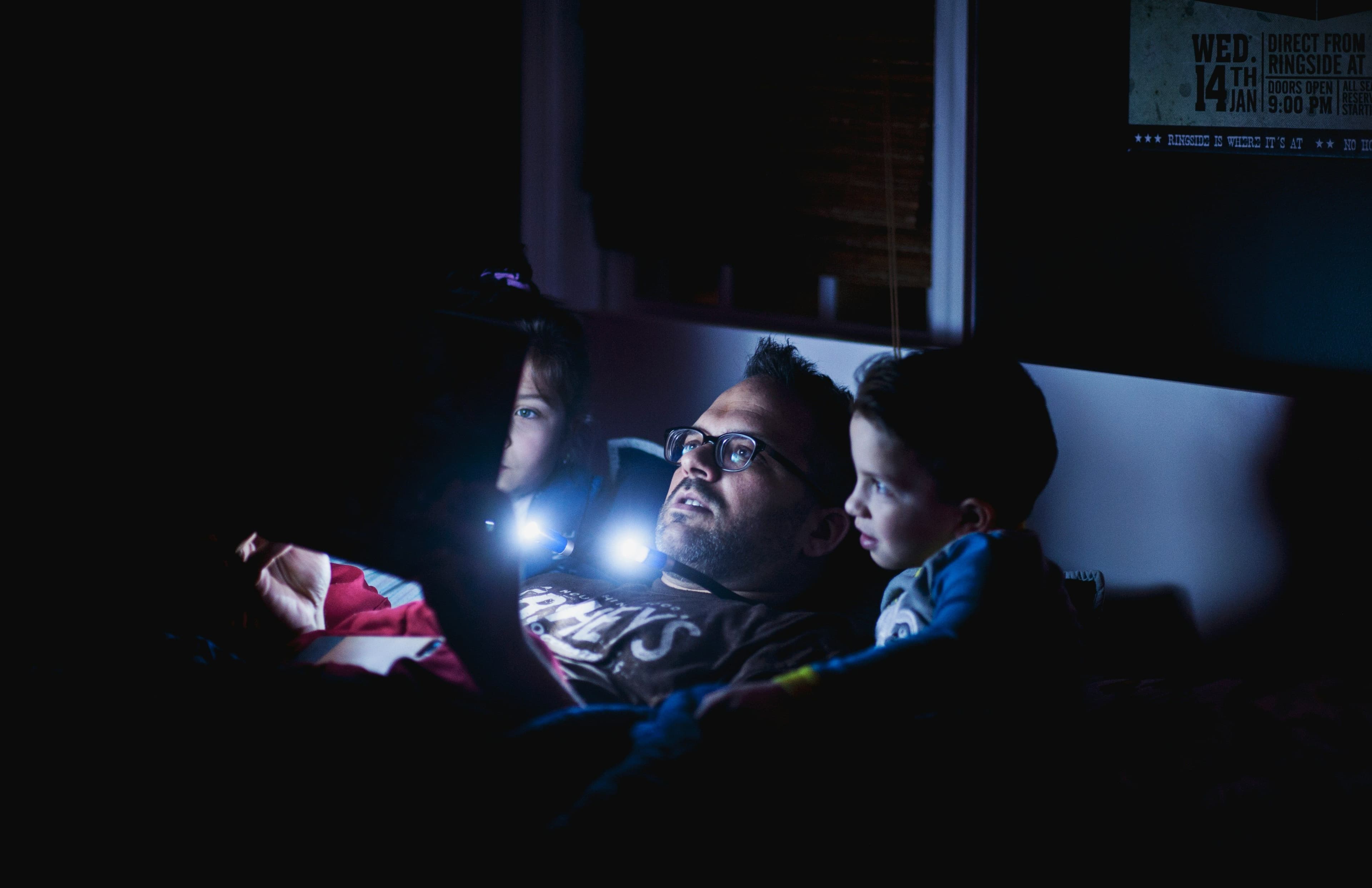
Researchers call this circadian misalignment, and its effects are far more serious than just feeling off. Studies have linked chronic circadian disruption to impaired cognitive function, increased risk of depression and anxiety, metabolic disruption including insulin resistance, weakened immune function, and longer-term associations with cardiovascular disease. We were not designed to live under artificial light. We evolved under the full spectrum of the sun.
What winter darkness does to us
At my latitude in Norway, December means barely six hours of light — and much of that is diffuse, low-angle, and cloud-filtered. The light intensity on a grey Norwegian winter day might reach 1,000–5,000 lux. A clear summer day delivers up to 100,000 lux. Your circadian clock notices the difference profoundly.
When light exposure is insufficient — particularly in the morning — the SCN struggles to anchor the daily rhythm properly. Melatonin secretion becomes prolonged, keeping you in a state of biological twilight for more of the day, the cortisol awakening response is blunted, and serotonin production falls.
Seasonal Affective Disorder (SAD) affects an estimated 2–3% of the general population in northern Europe, but subclinical seasonal mood changes — lower mood, fatigue, increased appetite, reduced motivation — are thought to affect up to 20% or more of people at northern latitudes. I know this firsthand. The shift from August to November doesn’t just change the temperature; it changes who I am a little. What I’ve come to understand is that this isn’t a character flaw. It’s a light deficiency.
The serotonin connection
Serotonin is often described as the “feel-good” neurotransmitter — associated with mood stability and emotional resilience. What’s less commonly known is that light exposure directly stimulates serotonin production. Less light means less serotonin. And because serotonin is also the direct chemical precursor to melatonin, when serotonin falls, melatonin regulation is affected too — you may end up with an irregular profile that makes sleep feel less effective even when you’re getting enough of it.
This is why morning bright light therapy is now one of the most evidence-backed treatments for seasonal depression. In multiple meta-analyses, it performs comparably to antidepressant medication for SAD, with faster onset and fewer side effects. It’s not alternative medicine. It’s biology.
Getting back in sync
The good news is that the circadian system is remarkably responsive to light, and you don’t need perfect conditions to see improvement — just better conditions than most of us currently have.
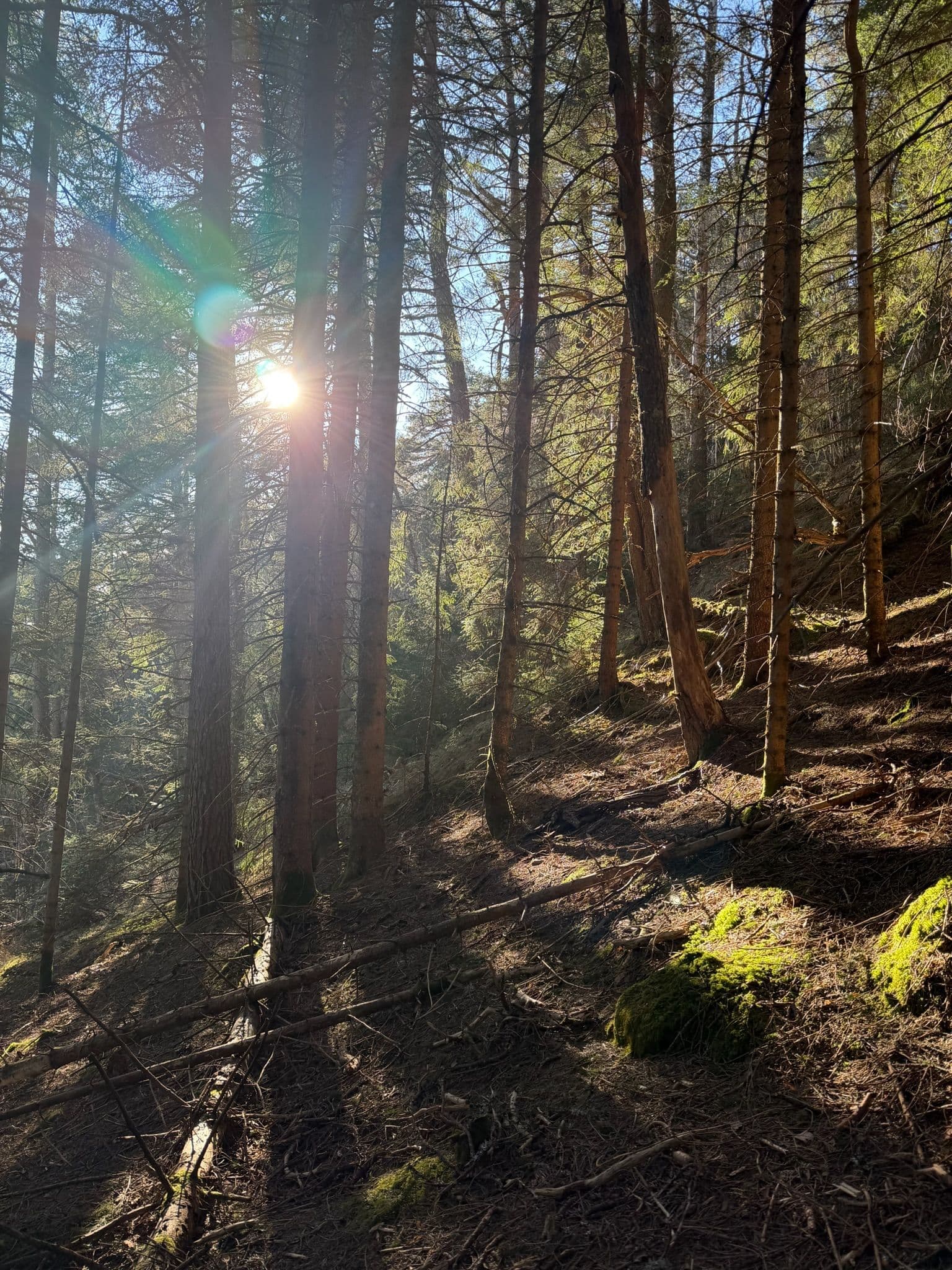
The most powerful reset is morning light. Getting bright light — ideally natural sunlight — within the first 30–60 minutes of waking has the strongest effect on anchoring the circadian rhythm, and even on overcast days, outdoor light is significantly brighter than most indoor environments. A 20-minute walk on a bright morning delivers far more circadian signal than hours spent under typical office lighting, because intensity matters more than duration. Consistency reinforces the effect: the circadian clock responds to regularity, and a steady morning routine stabilizes the rhythm across seasons. In the evenings, dimming artificial lights and reducing screen exposure allows the natural melatonin rise to happen without interruption.
We were built for the sun
There’s a certain irony in the fact that we’ve built a world so insulated from the very thing our biology depends on. We spend an estimated 90% of our lives indoors, working under lights that — despite their brightness — are spectrally impoverished compared to sunlight, and we wonder why so many of us feel tired and flat.
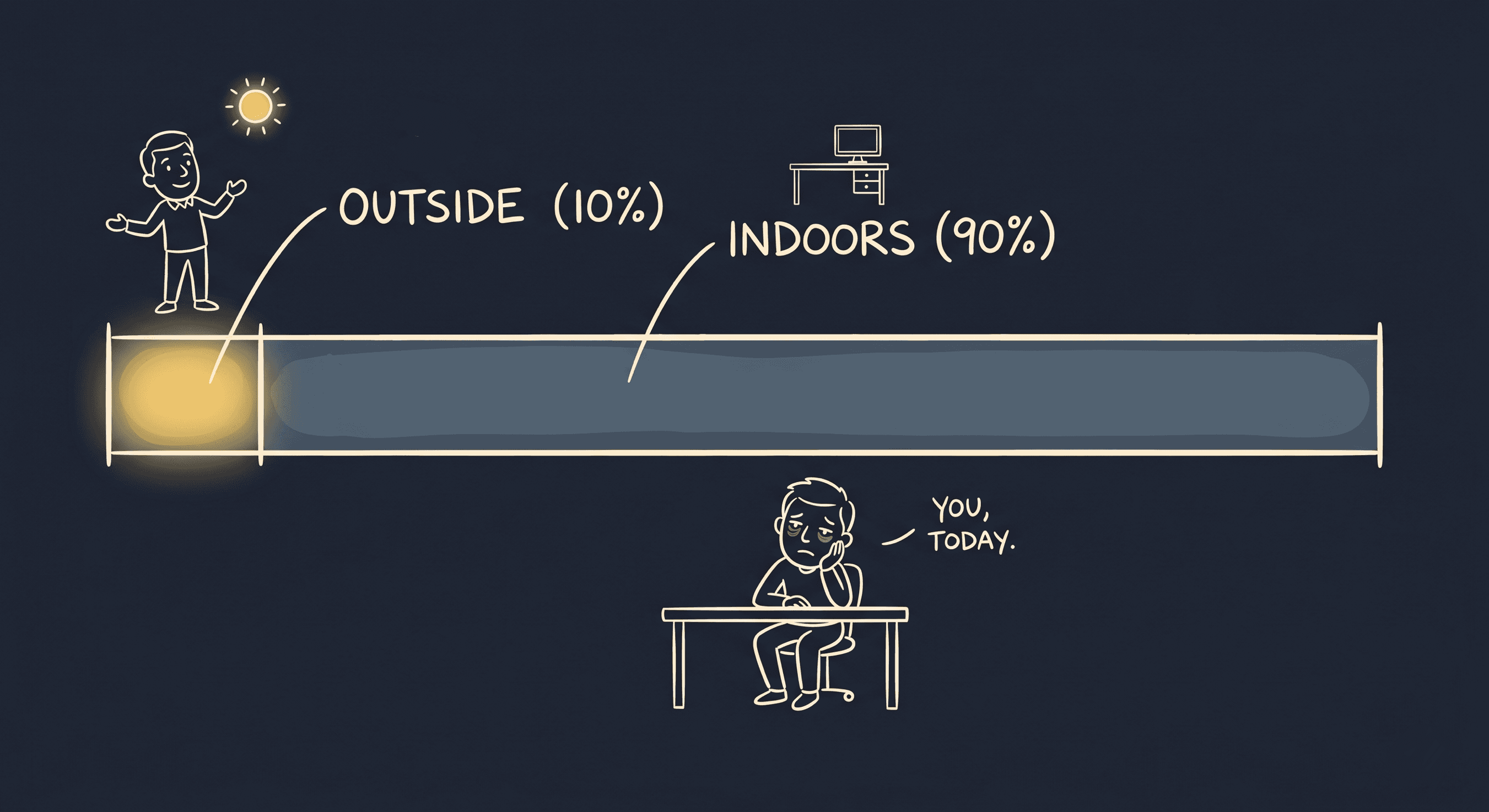
This is not inevitable. It’s a mismatch between how we were designed and how we currently live. For me, living with Norway’s dramatic seasons has made this viscerally real. The return of light in March and April doesn’t just feel good — it feels like being switched back on, like something latent in me recognizes the signal and responds.
Your body has a clock. And it was built to run on sunlight.
Go Deeper
If you want to explore this topic further:
- Circadian rhythms — Wikipedia: Circadian rhythm
- Seasonal affective disorder — Wikipedia: Seasonal affective disorder
- Light as a central modulator — Nature Reviews Neuroscience: LeGates et al. (2014)
- Bright light therapy vs. antidepressants — JAMA Psychiatry: Lam et al. (2016)
Heidi Fink
Content and project lead, Sollees
Heidi is on a mission to share honest, well-grounded information about sunlight and health. She is especially drawn to the biology of it all — how our bodies are wired to respond to light, and what that means for the way we live.
Keep reading
 The Hidden Thing Sunlight Does to Your HeartRegular, moderate sun exposure is a health behaviour the body depends on.
 How Sunlight Makes Vitamin DSunlight is not just pleasant to be in. For vitamin D, it is the starting point of a process your body cannot easily replace.
 The Physics of Sunlight II: The Ghosts the Sun Sends Through YouNeutrinos tell us something strange and beautiful about what the sun really is.